Best Travel

MY FAVOR!

My Travel Agent

Saturday, December 29, 2007

Travelling To Malaysia


Travelling To Malaysia


Entering Malaysia

To enter Malaysia, visitors must have a national passport or other internationally recognized travel documents with a validity period of at least six months beyond the length of stay in Malaysia. All passports and travel documents must be endorsed for travelling in Malaysia.

Most visitors, either on business or pleasure trips, do not require visas to enter Malaysia but this really depends on how long you will be in the country. Please refer to the following information on visa requirements to see if you will really need a visa.
Passports

A valid passport or other travel documents recognised by the Malaysian government required by all. The former must be valid for at least 6 months at date of entry and the latter should be endorsed with a valid re-entry permit.
Visas

Most visitors (including all nationals of countries listed in the chart) do not require a visa to enter Malaysia if the period is less than 1 month and the purpose of the visit is business or social (see below for more detailed requirements).

However, visas are required at all times by nationals of the following countries: Afghanistan, Bangladesh, Bhutan, China (PR), India, Myanmar, Nepal, Nigeria, Pakistan, Sri Lanka, Taiwan and Vietnam (Nationals of these countries, except Nigeria, may be granted visa relaxation on transiting Malaysia for under 72 hours if in possession of confirmed onward airline tickets to a third country before arriving).

Visas are not required by the following for social or business visits:

1. Nationals of EU countries for stays of up to 3 months (except nationals of Ireland for stays of up to 2 months and nationals of Greece and Portugal for stays of up to 1 month)
2. Nationals of Commonwealth countries (except nationals of those countries mentioned above who do require a visa) for stays of up to 1 month; nationals of Australia, Canada, New Zealand and South Africa for up to 3 months
3. Nationals of Albania, Algeria, Argentina, Bahrain, Bosnia-Herzegovina, Brazil, Croatia, Cuba, Czech Republic, Egypt, Hungary, Iceland, Japan, Jordan, Korea (Rep. of), Kuwait, Lebanon, Liechtenstein, Morocco, Norway, Oman, Peru, Poland, Qatar, Romania, San Marino, Saudi Arabia, Slovak Republic, Switzerland, Tunisia, Turkey, Uruguay, United Arab Emirates, USA and Yemen for stays of up to 3 months
4. Nationals of CIS countries for stays of up to 1 month (except nationals of Kyrgyzstan and Turkmenistan for stays of up to 3 months)
5. Nationals of Iran, Iraq, Libya, Palestine and Syria for up to 14 days
6. Nationals of all countries other than those mentioned above for stays of up to 1 month.

Applications and enquiries to: Malaysian High Commission
Weather

Malaysia has an equatorial climate with fairly uniform temperatures throughout the year. Temperatures range from 32�C during the day to 22�C at night. It can be slightly cooler in the hill country. (Rainfall is common throughout the year, averaging 200-250cm a year.)
Currency

The Malaysian Ringgit (RM) is issued in notes of denominations of RM100, RM50, RM20, RM10, RM5, RM2 and RM1. There are coins of RM1 and 50, 20, 10, 5 and 1 sen (cents). Major credit cards are accepted in almost all major merchant establishments in urban and suburban centres.

Many commercial banks throughout the country, except for the states of Kedah, Kelantan and Terengganu, operate Monday to Friday from 10am to 4pm and on Saturday from 9.30am to 11.30am. Some, however, close at 2pm on weekdays. In the states of Kedah, Kelantan and Terengganu, commercial banks are closed on Friday and operate from 9.30am to 11.30am on Thursday.

Most major hotels charge a nominal fee for currency conversion. All commercial banks are authorized foreign exchange dealers. Most of these banks, through their branches, buy and sell major foreign currency notes. Licensed foreign money-changers are found in urban centres, key entry exit points and shopping complexes. All major hotels are licensed to buy, but not sell, foreign currencies in the form of notes and travellers cheques.

About Malaysia

Malaysia is made up of 13 states. Which is Johor, Melacca, Pahang, Penang, Perak, Sabah, Sarawak, Terengganu, Kelantan, Negeri Sembilan, Kedah, Perlis and Selangor. Kuala Lumpur is the capital. It is the largest city and the heart of Malaysian business and culture.

Malaysia is one of the most pleasant, hassle-free countries to visit in southeast Asia. It's buoyant and wealthy, and has moved towards a pluralist culture based on a vibrant and interesting fusion of Malay, Chinese, Indian and indigenous cultures and customs. Parliament House, (see picture) is the symbol of democracy in Malaysia.

Strategically located between the Indian Ocean and the South China Sea, Malaysia has long been the meeting place for traders and travellers from west and east. Its history is one of continuous interaction with foreign powers and influences.
Capital: Kuala Lumpur
Area: 328,550 sq km
Population: 24.53 million
Currency: Ringgit (RM)
Average exchange rate: $1=3.80

GDP: $200 billion (2001 est.)
GDP growth: 4.1%
GDP per capita: $3,626.58
Inflation rate: 1.5% (2003 forecast)
Unemployment rate: 3.4%

Exports: $8.0 billion
Imports: $6.35 billion

Investments(2002)
Foreign: $3.09 billion
Domestic: $1.85 billion
Total: $4.94 billion Top five exports:
Electrical and electronic products, Palm oil, Chemicals and chemical products, Liquefied natural gas, Crude petroleum

Top five imports:
Electrical and electronic products, Chemical and chemical products, Machinery, appliances and parts, Metal products, Iron and steel products

Major export markets (percentage share)
US (16.9 percent), Singapore (16.4 percent), Japan (11.5 percent), China (6.8 percent), Hong Kong (6.6 percent).

Major sources of imports (value)
Japan ($1.05 billion), US ($1.0 billion), Singapore ($0.78 billion), China ($0.5 billion), Republic of Korea ($0.32 billion)
Population

The outstanding characteristic of Malaysia's population today is its highly variegated ethnic mix makers it one of the prime examples of a multiracial society in the whole world. The multiethnic character of Malaysia's population has come into being over the course of the last 150 years. Broadly speaking Malaysia's ethnic groups fall into two main categories: those with culture affinities indigenous to the region and to one another, who are classified as bumiputera; and those whose cultural affinities lie outside.

Malaysia is a multicultural nation of friendly, warm hearted people. It has population of 17.9 million people. Peninsular Malaysia has 14.6 million people while Sabah and Sarawak have 3.3 million people.
Religion

Although Islam is the national religion (approx. 70%), the Malaysian Constitution guarantees freedom of worship. Islam, Christianity, Hiduism, Buddhism, Taoism and Sikhism are the main religions in Malaysia, and there are many mosques, temples and churches throughout the country.

Travelling Tips

Electricity & Water

Most parts of the country have electricity and piped water supply. Malaysia is on a 240-volt 50-cycle system
Clothing

Lightweight or mixed-fibre clothing is normal with medium-weight clothes only required for visits to the cooler, highland areas. Be sure to pack good walking shoes!
Communications

Peninsular Malaysia, Saban and Sarawak have efficient modern telephone, facsimile, telegraph, telex and airmail communications, both internally and with the rest of the world.

Tuesday, April 17, 2007

Tioman Island


Tioman is the biggest and most impressive island at the east coast. There is a brisk jungle covers a ridge on the west section of the island, which ends at the idyllic location of a beautiful palm fringed beach. Tioman offers a wide range of activities for visitors: snorkeling in crystal clear water, discover the beautiful underwater world when you go diving, or just laze on the beach while you work on that tan. Also, there is a jungle on the island that is just begging to be explored.

Tioman was discovered as a holiday destination quite some time ago. It was the setting for the supposedly mythical magical island of Bali Hai from the 1958 Hollywood movie 'South Pacific'. In the 70s the Time magazine selected Tioman as one of the world's most beautiful islands.

Tioman is still rated as one of the world's most beautiful islands. It presents itself as a paradise island in the tropics. But sometimes you have to search for this paradise off the beaten track.

Tuesday, April 3, 2007

Travelling To Malaysia

Entering Malaysia

To enter Malaysia, visitors must have a national passport or other internationally recognized travel documents with a validity period of at least six months beyond the length of stay in Malaysia. All passports and travel documents must be endorsed for travelling in Malaysia.

Most visitors, either on business or pleasure trips, do not require visas to enter Malaysia but this really depends on how long you will be in the country. Please refer to the following information on visa requirements to see if you will really need a visa.

Passports

A valid passport or other travel documents recognised by the Malaysian government required by all. The former must be valid for at least 6 months at date of entry and the latter should be endorsed with a valid re-entry permit.

Visas

Most visitors (including all nationals of countries listed in the chart) do not require a visa to enter Malaysia if the period is less than 1 month and the purpose of the visit is business or social (see below for more detailed requirements).

However, visas are required at all times by nationals of the following countries: Afghanistan, Bangladesh, Bhutan, China (PR), India, Myanmar, Nepal, Nigeria, Pakistan, Sri Lanka, Taiwan and Vietnam (Nationals of these countries, except Nigeria, may be granted visa relaxation on transiting Malaysia for under 72 hours if in possession of confirmed onward airline tickets to a third country before arriving).

Visas are not required by the following for social or business visits:

  1. Nationals of EU countries for stays of up to 3 months (except nationals of Ireland for stays of up to 2 months and nationals of Greece and Portugal for stays of up to 1 month)
  2. Nationals of Commonwealth countries (except nationals of those countries mentioned above who do require a visa) for stays of up to 1 month; nationals of Australia, Canada, New Zealand and South Africa for up to 3 months
  3. Nationals of Albania, Algeria, Argentina, Bahrain, Bosnia-Herzegovina, Brazil, Croatia, Cuba, Czech Republic, Egypt, Hungary, Iceland, Japan, Jordan, Korea (Rep. of), Kuwait, Lebanon, Liechtenstein, Morocco, Norway, Oman, Peru, Poland, Qatar, Romania, San Marino, Saudi Arabia, Slovak Republic, Switzerland, Tunisia, Turkey, Uruguay, United Arab Emirates, USA and Yemen for stays of up to 3 months
  4. Nationals of CIS countries for stays of up to 1 month (except nationals of Kyrgyzstan and Turkmenistan for stays of up to 3 months)
  5. Nationals of Iran, Iraq, Libya, Palestine and Syria for up to 14 days
  6. Nationals of all countries other than those mentioned above for stays of up to 1 month.

Applications and enquiries to: Malaysian High Commission

Weather

Malaysia has an equatorial climate with fairly uniform temperatures throughout the year. Temperatures range from 32�C during the day to 22�C at night. It can be slightly cooler in the hill country. (Rainfall is common throughout the year, averaging 200-250cm a year.)

Currency

The Malaysian Ringgit (RM) is issued in notes of denominations of RM100, RM50, RM20, RM10, RM5, RM2 and RM1. There are coins of RM1 and 50, 20, 10, 5 and 1 sen (cents). Major credit cards are accepted in almost all major merchant establishments in urban and suburban centres.

Many commercial banks throughout the country, except for the states of Kedah, Kelantan and Terengganu, operate Monday to Friday from 10am to 4pm and on Saturday from 9.30am to 11.30am. Some, however, close at 2pm on weekdays. In the states of Kedah, Kelantan and Terengganu, commercial banks are closed on Friday and operate from 9.30am to 11.30am on Thursday.

Most major hotels charge a nominal fee for currency conversion. All commercial banks are authorized foreign exchange dealers. Most of these banks, through their branches, buy and sell major foreign currency notes. Licensed foreign money-changers are found in urban centres, key entry exit points and shopping complexes. All major hotels are licensed to buy, but not sell, foreign currencies in the form of notes and travellers cheques.


About Malaysia

Malaysia is made up of 13 states. Which is Johor, Melacca, Pahang, Penang, Perak, Sabah, Sarawak, Terengganu, Kelantan, Negeri Sembilan, Kedah, Perlis and Selangor. Kuala Lumpur is the capital. It is the largest city and the heart of Malaysian business and culture.

Malaysia is one of the most pleasant, hassle-free countries to visit in southeast Asia. It's buoyant and wealthy, and has moved towards a pluralist culture based on a vibrant and interesting fusion of Malay, Chinese, Indian and indigenous cultures and customs. Parliament House, (see picture) is the symbol of democracy in Malaysia.

Strategically located between the Indian Ocean and the South China Sea, Malaysia has long been the meeting place for traders and travellers from west and east. Its history is one of continuous interaction with foreign powers and influences.

Capital: Kuala Lumpur
Area: 328,550 sq km
Population: 24.53 million
Currency: Ringgit (RM)
Average exchange rate: $1=3.80

GDP: $200 billion (2001 est.)
GDP growth: 4.1%
GDP per capita:
Inflation rate: 1.5% (2003 forecast)
Unemployment rate: 3.4%

Exports: $8.0 billion
Imports: $6.35 billion

Investments(2002)
Foreign: $3.09 billion
Domestic: $1.85 billion
Total: $4.94 billion
$3,626.58
Top five exports:
Electrical and electronic products, Palm oil, Chemicals and chemical products, Liquefied natural gas, Crude petroleum

Top five imports:
Electrical and electronic products, Chemical and chemical products, Machinery, appliances and parts, Metal products, Iron and steel products

Major export markets (percentage share)
US (16.9 percent), Singapore (16.4 percent), Japan (11.5 percent), China (6.8 percent), Hong Kong (6.6 percent).

Major sources of imports (value)
Japan ($1.05 billion), US ($1.0 billion), Singapore ($0.78 billion), China ($0.5 billion), Republic of Korea ($0.32 billion)
Population

The outstanding characteristic of Malaysia's population today is its highly variegated ethnic mix makers it one of the prime examples of a multiracial society in the whole world. The multiethnic character of Malaysia's population has come into being over the course of the last 150 years. Broadly speaking Malaysia's ethnic groups fall into two main categories: those with culture affinities indigenous to the region and to one another, who are classified as bumiputera; and those whose cultural affinities lie outside.

Malaysia is a multicultural nation of friendly, warm hearted people. It has population of 17.9 million people. Peninsular Malaysia has 14.6 million people while Sabah and Sarawak have 3.3 million people.

Religion

Although Islam is the national religion (approx. 70%), the Malaysian Constitution guarantees freedom of worship. Islam, Christianity, Hiduism, Buddhism, Taoism and Sikhism are the main religions in Malaysia, and there are many mosques, temples and churches throughout the country.


Travelling Tips

Electricity & Water

Most parts of the country have electricity and piped water supply. Malaysia is on a 240-volt 50-cycle system

Clothing

Lightweight or mixed-fibre clothing is normal with medium-weight clothes only required for visits to the cooler, highland areas. Be sure to pack good walking shoes!

Communications

Peninsular Malaysia, Saban and Sarawak have efficient modern telephone, facsimile, telegraph, telex and airmail communications, both internally and with the rest of the world.
Sunday, April 1, 2007

Advice for Traveling Alone

- Traveling alone can be an intimidating experience, especially for those who don't do it often. Knowing what to expect and thinking about the challenges solo air travel throws at you ahead of time can make it an easy and efficient experience.

Avoid checking a bag. This is true of any air travel really, but I find it's much easier to be a self-contained entity when alone, leaving as little responsibility to the airline as possible. There's nobody to search for the right baggage claim with you or to help you talk to the agent if a bag gets lost. By keeping everything with you, there's less chance of error.

Along those same lines, don't be afraid to gate check a bag (usually signified by yellow tags put on the bag as you board). This works differently from normal bag checking, as any gate checked bag is only given to the airline as you board the plane, and is retrieved right as you exit the plane. The bag never actually goes through the whole luggage system - that invariably ends misplacing things.

Traveling alone seems to increase the chance of you being searched at security, particularly if one is not obviously on a business trip. Just assume you will be searched and pack accordingly.

The biggest advantage of traveling alone is usually the ability to get an exit row seat. If the airline you are flying with allows online check-in (usually available 24 hours before departing time) exit row seats can usually be obtained there. If not, make sure to ask at the gate, as most of the time there will be the odd one exit row seat that nobody has taken because they want to sit with their traveling companions. They get company, you get leg room. Sometimes a book and being able to stretch is better than someone to talk to.

Wednesday, March 28, 2007

Travel Agent Malaysia

Amber Regency Travel
http://www.ambertravel.com.my/
Suite 825, Level 8, Block A3, Leisure Commerce Square, 9 Jalan PJS 8/9, 46150 Petaling Jaya
Tel: 03 7877 1050, Fax: 03 7877 0050

Anjung Holidays - Perhentian Island
http://www.pulauperhentian.com.my/
S1A, Terminal Pelancongan Kuala Besut, 22300 Besut, Terengganu
Tel: 09 697 4095, Fax: 09 697 8679

Apple Vacations & Conventions
http://www.appleholiday.com/
Suite A, 1st Floor, Wisma Mode Circle, 57-59 Jalan Bukit Bintang, 55100 Kuala Lumpur
Tel: 03 2141 8250, Fax: 03 2141 8029

Asiatravelmart
http://www.asiatravelmart.com/

Asian Overland Services Tours & Travel
http://www.asianoverland.com.my/
39C & 40C, Jalan Mamanda 9, Ampang Point, 68000 Ampang
Tel: 03 42529100, Fax: 03 4252 9800

Beautiful Holidays - Plastic and cosmetic surgery, breast enlargement and holiday in Penang
http://www.beautiful-holidays.com/
34 Nagore Road, Georgetown, 10050 Penang
Tel: 04 227 9010, Fax: 04 227 9012

Buy Express Bus and Air Tickets Online
http://www.theticketing.com/

BY Travels
http://asia.geocities.com/bytravels/

Cuti.com.my
http://www.cuti-cuti.com.my/

Cruise Center - Travel agancy representing Star Cruises
http://www.cruisecenter.com.my/

Dynamite Cruises Langkawi
http://www.dynamitecruises.com/

eMalaysiaTravel.com
http://www.emalaysiatravel.com/

EM Diving Holidays
http://www.eastmarines.com.my/

Emas Holidays
http://www.emasholiday.com/

Emerald Global
http://www.etours-malaysia.com/
1st & 2nd Floors, 15/16 New Burlington Street, London W1S 3BJ, UK
Tel: 020 7312 1708, Fax: 020 7312 1711

Europe-online.com.my
http://www.europe-online.com.my/

Excellence Holidays
http://www.excellenceholidays.com/
Wisma Excellence, 28 & 30 Jalan Padang Walter Grenier, Off Jalan Imbi, 55100 Kuala Lumpur
Tel: 03 2117 2888, Fax: 03 2142 4366

Exotic Borneo
http://www.exborneo.com/
Suite B, 1F, Lot 24 Likas Industrial Centre, 88400 Kota Kinabalu, Sabah
Tel: 088 24 5920, Fax: 088 24 5902

GEM Travel & Tour
http://www.gem-travel.com.my/
37 Jalan Wan Kadir 2, Taman Tun Dr Ismail, 60000 Kuala Lumpur
Tel: 03 7727 928, Fax: 03 7727 9661

Gemilang Holidays
http://www.gholiday.com/
62 Pusat Dagangan Kelana Mas, Kuah, 07000 Pulau Langkawi, Kedah
Tel: 04 966 8575

Harpers Travel
http://welcome.to/harpers

H.I.S. Travel
http://www.his-travel.com/
5th Floor Wisma KLIH, 126 Jln Bukit Bintang, 55100 Kuala Lumpur
Tel: 03 2141 9626, Fax: 03 2141 9593

Holiday Tours & Travel
http://www.holidaytours.com.my/

Hwajing Travel & Tours
http://www.hwajing.com.my/
Lot 2.07, 2nd Floor, Plaza Uncang Emas (Ue3), 85 Jalan Loke Yew, 55200 Kuala Lumpur
Tel: 03 9200 2929, Fax: 03 9283 6566

Ideal Holidays
http://www.ideal-borneo.com/

Intra Travel - Themed tours of nature, adventure & wildlife in Sabah/Borneo
http://www.intra-travel.com.my/

Jebsen Travel & Tours
http://www.jebsen.com.my/
Lot 2.81, Wisma Cosway, 88 Jalan Raja Chulan, 50200 Kuala Lumpur
Tel: 03 2148 5583, Fax: 03 2141 2828

KAA Travel & Tours (formerly Elmona Travel & Tours)
http://www.kaatravel.com/
4th Floor, Wisma SPK, Jalan Sultan Ismail, 50250 Kuala Lumpur
Tel: 03 21480 604, Fax: 03 2148 0641

Kapas Travel & Tours
http://www.kapastravel.com.my/
Main Lobby, Primula Parkroyal, P.O.Box 23, Jalan Persinggahan, 20904 Kuala Terengganu
Tel: 09 623 5915, Fax: 09 624 7694

KB Backpackers Holiday
http://www.kb-backpackers.com.my/
4261 - D, 1st Floor, Jalan Kebun Sultan, 15350 Kota Bharu, Kelantan
Tel: 09 743 2125, Fax: 09 743 2125

Ken Air Leisure
http://www.kenair.com.my/
7.01 Bangunan Yayasan Selangor, Jalan Bukit Bintang, 55100 Kuala Lumpur
Tel: 03 2142 3722, Fax: 03 2142 6652

KKM Travel
http://www.kkmtravel.com/
Lot 236, Beautiful Jade Centre, 98007 Miri, Sarawak
Tel: 085 41 7899, Fax: 085 41 4629

Kuala Lumpur


About Kuala Lumpur
capital city of malaysia

Kuala Lumpur, the capital of Malaysia, is located on the west coast of Peninsula of Malaysia. Covering some 243 sq km, it lies approximately 40 km from the coast. Kuala Lumpur -or KL as it is commonly called- lies in a valley surrounded by jagged hills. Kuala Lumpur was originally a mining settlement in the late 1800s where tin was discovered at the confluence of the Klang and Gombak rivers. Although KL's tin trade has declined since, the prosperity of the city has continued to grow.

Kuala Lumpur leads the country's fast paced development in trade and commerce, banking and finance, manufacturing, transportation, information technology and tourism. The city began as a mining settlement in the late 1800s with the discovery of tin at the confluence of the Klang and Gombak rivers. Although KL's tin trade has since declined, the growth of the city has remained unabated. Today, with a population of 1.5 million, it is the pulse of the nation. Kuala Lumpur leads the country's fast paced development in trade and commerce, banking and finance, manufacturing, transportation, information technology and tourism.


Tuesday, March 27, 2007

Things To See In Malaysia

If you are planning on taking a vacation in the near future, I recommend that you travel to Malaysia. Malaysia is a beautiful place to really enjoy yourself. There are plenty of places that you can visit while you are there if you are traveling to site-see. If you prefer to just relax, there are plenty of places devoted to that past time as well.

In all actuality, Malaysia is a place that all nature lovers should visit because it has pristine beaches, tropical islands, haunting caves and untamed jungles. The natural beauty of Malaysia will open your senses and capture your heart.

Kuala Lumpur

Kuala Lumpur is the hub of Malaysia and is often overlooked by tourists. This is a mistake as there is a lot to see that will take your breath away including:

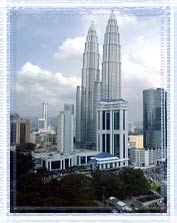
1) Petronas Twin Towers

2) Sultan Abdul Samad Building which is full of Victorian and Moorish architectural styles.

3) Tasek Perdana Lake Gardens which is a perfect place to have a picnic with your family or enjoy a nice walk.

4) Parliament House


5) National Monument

6) National Museum which is the home to many historical exhibits and also houses craftwork from many different parts of the nation and a wide variety of architectural styles that make it so unique.

7) National Mosque which is surrounded by spectacular lawns and elegant fountains that decorate the lawn like a Christmas tree, as strange as that may sound. The National Mosque was built in 1965; the dome on the Mosque is in the shape of an eighteen point star to represent the thirteen states in the country and the five central pillars of Islam.

8) Old Chinese Clan House where Chan See Yuen lived.

9) The Friday Mosque which is located in the middle of the Klang and Gombak rivers is the most popular place to visit in the city. A great place to watch the sun set.

Kuala Lumpur also offers many eating and shopping opportunities.

Magnificent Caves and Parks

1) The Batu Caves are located north of the city of Kuala Lumpur. They can be reached by climbing two hundred and seventy two steps. Wow, that is a lot of steps, isn’t it? These caves house the Hindu Shrine of Lord Subramanian.

2) The Museum Caves are full of brightly colored statues and murals from Hindu mythology.

3) Templar Park is nothing but all natural rainforest that is bubbling with beauty for everyone to see. It is full of jungle paths, swimming lagoons and waterfalls that all lie within the park boundaries. A magical place, indeed.

4) Malaysia’s agricultural park which is located in Shah Alam, Selangor at Cherakah has a large play area for all the skateboarders and roller skaters out there. If you have teens with you, this is the place for them.

Overall, Malaysia is a wonderful place to take a vacation. It is still considered exotic, but is becoming more of a mainstream destination as it gains in popularity.

Rick Chapo is with Nomad Journals - makers of travel journals to preserve your travel experiences. Great Gifts!

Holiday Shopping Tips for Malaysia

Holiday makers have a myriad of reasons for choosing Malaysia as a holiday destination such as its diverse culture, wonderful scenery, friendly people, and fantastic food. But another reason is the great shopping. While shopping may not be the main reason you choose to holiday in Malaysia, while you're there you can indulge in some retail therapy as an added bonus; especially considering the bargain prices and wide variety to choose from.

While you will find bargains galore in most shopping malls throughout Malaysia the hot spot for shopping is the capital Kuala Lumpur, which has many large shopping malls to choose from, such as:

Suria KLCC

This shopping mall is situated in the city center's golden triangle and adjoins the Petronas Twin Towers (featured in the movie Entrapment starring Sean Connery and Catherine Zeta Jones). The mall is extremely modern and is one of the more up-market malls in the city, with a total of six levels (an area of 1.5 million square feet). You'll find everything here that you'd find in any western shopping mall plus many locally made products and all at reasonable prices.

Sungai Wang Plaza

This shopping mall is located on Jalan Sultan Ismail across the road from the Grand Plaza Hotel. While certainly not as modern as some of the other shopping malls, what it lacks in building appeal is more than made up for in variety and price of the products available. Each of the six floors spread out in a maze of walkways and retail shops making it easy to loose hours just browsing. For ladies looking to update their shoe collection this is the place to do it. There are so many shoe shops here with beautiful dress shoes at bargain prices that you'll need an extra bag for the trip home. For wearers of eye glasses you will find a number of eyewear shops where you can get a new pair of modern glasses made within a day or two that will cost you half as much as in most western cities. This mall has so much to offer that you could easily spend a whole day there and still not reach the top floors.

Times Square

This mall is located around the corner from Sungei Wang Plaza and is within easy walking distance. This is yet another large mall which also includes a hotel and theme park (complete with rollercoaster). The shopping here is more up-market than the Sungei Wang Plaza which is also reflected in the prices. Although the price you'll pay for your purchases here is more than some of the budget outlets, you also get better quality goods so you do tend to get what you pay for.

China Town Markets

Located in Petaling Street the market is open everyday. Although the majority of stalls open from 5pm onwards the best time to visit is during the day as you'll still find many stalls open without the large crowd. Stall holders are happy to haggle over the price of goods of which there are lots to choose from. A good tip is to carry a bottle of water with you as it does tend to get very humid at the markets. Also try not to use the bathroom facilities at the markets if at all possible as they are not as hygienic as most westerners are used to.

General Tips

When preparing to head off on a shopping trip in Malaysia there are a few things to remember:

- Most shopping outlets in Malaysia don't open until 11am; however they do tend to stay open until around 10pm.

- Bathroom facilities in some of the older shopping malls can be an eye opener for westerners. Asian style toilets are sunken into the ground at the level of a small step for squatting rather than western style toilets for sitting; however most malls have an even mix of Asian and western style toilets within each bathroom.

- In older malls you may also have to pay the attendant at the door not only to use the bathroom itself but also for toilet tissue. A good travel tip is to purchase some personal facial tissues (you can get them in travel packs) and carry in your bag or backpack.

With such a large variety of goods to choose from at bargain prices in Malaysia you may be tempted to purchase more than you normally would. When shopping try to keep in mind that airlines have quite hefty charges for excess baggage weight which could make the price of those "bargains" sometimes more expensive than you'd pay at home, so always set yourself some limits.

Paulina Jenkins

http://www.e-knights.com/shopping

cheatle894@aim.com

Friday, March 23, 2007

Malaysia Travel


Malaysia is one of the most pleasant, hassle-free countries to visit in Southeast Asia. Several decades of sustained economic growth and political stability have made it one of the most buoyant and wealthy countries in the region, and although political power (Malay) and economic clout (Chinese) are still traditionally divided along racial lines, Malaysia has moved towards a pluralist culture based on a vibrant and interesting fusion of Malay, Chinese, Indian and indigenous cultures and customs.